Environment
Aboriginal relic faces logging destruction

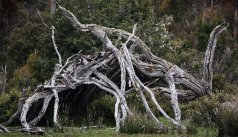

A FRAGILE man-made structure in a traditional Aboriginal hunting area near Cradle Mountain has been discovered.
The find has prompted calls for the area to be saved from logging and reserved.
The structure, a mia-mia, was discovered in a coupe of native forest on private land currently being considered for clearfelling and plantation development by Forest Enterprises Australia.
John Wilson, who owns neighbouring Iris Farm, which has been declared a nature reserve, has contacted Tasmania’s Aboriginal Heritage Office to have the structure and surrounding summer hunting grounds assessed.
He wants the mia-mia, the surrounding bush and nearby Daisy Dell Duckpond wetlands excluded from the proposed plantation area on Aboriginal cultural grounds.
His call has been supported by the Mersey Leven Aboriginal Corporation.
“This is a very important find and I would estimate from the way the timber has deteriorated that the structure is 200-400 years old,” corporation chairman Phillip “Wombat” Bassett-Cowen said yesterday.
“It should be protected. It is the only one I have seen in Tasmania.
“There is evidence of other early bark structures at South Mt Cameron and dome huts on the West Coast but it is the only intact structure I have seen.”
Dr Wilson said the structure resembled the mia-mias or temporary shelters that George Robinson describes in his journals of Tasmanian Aboriginal culture.
…
Stone tools and cupules, or rock art, also have been found in the area.
Dr Wilson alerted Tasmanian National Parks and Strategic Projects executive director Scott Gadd to the discovery.
In a letter, Mr Gadd advised the best way forward was for the structure to be photographed and measured and for it to be left to decay and perhaps excavated later.
Dr Wilson also wrote to Aboriginal Heritage general manager Michael Jones to outline his concerns.
“I was told by the forester drawing up the Forest Practices Plan for the coupe that the Forest Practices Authority only undertakes on-ground assessments of Aboriginal heritage after an area has been clearfelled,” Dr Wilson said.
“Clearly, if this is the case, then this fragile man-made wooden structure will be destroyed and whatever opportunity may exist to study and record it will be lost forever.”