Economy
Dubai crunch sparks panic

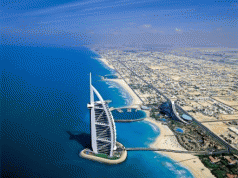

Fears of a dangerous new phase in the economic crisis swept around the globe yesterday as traders responded to the shock announcement that a debt-laden Dubai state corporation was unable to meet its interest bill.
Shares plunged, weak currencies were battered and more than £14 billion was wiped from the value of British banks on fears that they would be left nursing new losses.
Nervous traders transferred the focus of their anxieties from the risk of companies failing to the risk of nation states defaulting. Investors owed money by Mexico, Russia and Greece saw the price of insuring themselves against default rocket.
Although the scale of Dubai’s debts is comparatively modest at $80 billion (£48 billion), the uncertainty spooked the markets, with no one sure who its creditors are. Several banks rushed out statements to reassure investors that their exposure was small.
The FTSE 100 plunged by 171 points to 5,194 — its biggest one-day fall in eight months in one of the most jittery days in the financial markets since the depths of the banking crisis.
The Treasury, the Bank of England and the Financial Services Authority were monitoring events closely and are demanding figures from UK banks on their loan exposures to Dubai.
According to a senior government official, Dubai’s crisis is regarded as modest and manageable for Britain, but there were growing fears that Abu Dhabi, the oil-rich neighbouring emirate that has in the past given rescue loans, would leave Dubai to its fate.
Dubai World, the state-owned corporation that began the panic on Wednesday by demanding a standstill on its interest payments, worsened the mood when it postponed a teleconference for its bond holders, saying the phone lines were overwhelmed.
Gerard Lyons, chief economist with Standard Chartered, said: “The market reaction shows how vulnerable some economies are to the aftermath of the debt binge. This highlights how fragile confidence is.”