Article
Art, Land & Sea – TMAG’s New Exhibitions
Three of TMAG’s new exhibitions showcase modern art, Tasmanian photography, and fascinating seashells.

Last week*, I braved the cold weather and headed to the Tasmanian Museum and Art Gallery (TMAG) to explore three new exhibitions that are on display there.
Breaking with tradition
Becoming Modern: Mid-century Australian Art was the first exhibition I walked through.
It is on display in the Argyle Galleries on Level 1 of TMAG and brings together mid-20th-century artworks from Tasmania’s State Collection, featuring both well-known Australian modernists and less widely recognised artists.
The selection includes a wide range of styles, materials, and subjects, and explores how modernism took shape during the 20th century, changing the way artists saw the world and expressed their ideas. In Australia, modernism was driven by a desire to connect with international ideas and movements.
One of the works in Becoming Modern that particularly impressed me was ‘Engineers’, a sketch-style oil-on-canvas piece by Edwin Tanner, who began his artistic career in 1951, when he was in his early 30s. It depicts two engineers standing over a technical drawing that is stretched across a table.
Another artwork I was impressed by was ‘The Anzac’, a 1963 oil-on-hardboard of an elderly ANZAC veteran by artist Francis Lymburner. It was purchased with funds from the Friends of the Tasmanian Museum and Art Gallery in 1985.
Visitors to Becoming Modern are invited to create their own abstract art using provided pieces of fabric and hang them on the walls.
Tasmania in focus
After exploring Becoming Modern, I headed upstairs to Level 2 of the Argyle Galleries to visit Exposed Lands: 100 Years of Tasmanian Landscape Photography.
As the name suggests, the exhibition showcases a century of Tasmanian landscape photography. The state’s natural beauty and local places shaped by colonial exploration, adventure, and use of the land are on full display here.
Among the photographs on display are several by Olegas Truchanas, one of Australia’s most celebrated photographers and conservationists. His colour images of Tasmania’s rivers, forests, and mountains were used in lectures and presentations about the beauty and importance of Tasmania’s natural landscapes. Truchanas was also an advocate for protecting Tasmania’s ancient Huon pine forests, with one area he worked to preserve now known as the Truchanas Huon Pine Reserve. It is located within the Franklin-Gordon Wild Rivers National Park, along the Denison River.
I became fascinated by the old cameras displayed in glass cabinets running along the centre of the exhibition room, including the No. 4 Cartridge Kodak (1897-1907), which was designed to capture 4 x 5-inch photos on glass plates or No. 104 roll film without reloading. Another was a Rolleicord I Twin Reflex (1933-1936), a twin lens camera with Art Deco styling.

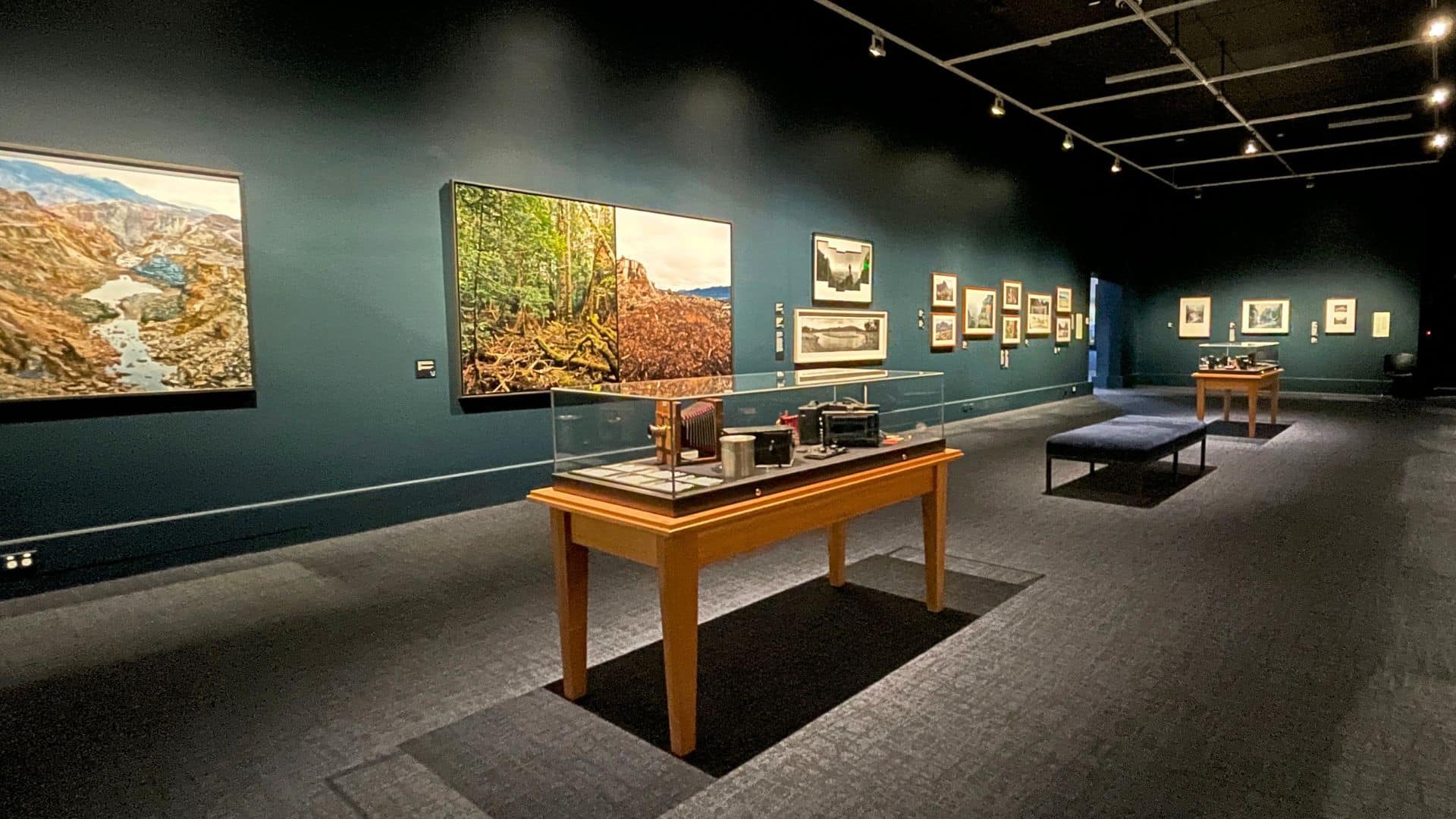
The Exposed Lands exhibition at TMAG.
Nature’s small masterpieces
In The World of Seashells, I learned about (you guessed it) seashells: how molluscs evolve, how shells grow, and what their colours and patterns can reveal. I also marvelled at the beauty of the shells on display.
The exhibition is aimed at children, but adults will find it informative too.
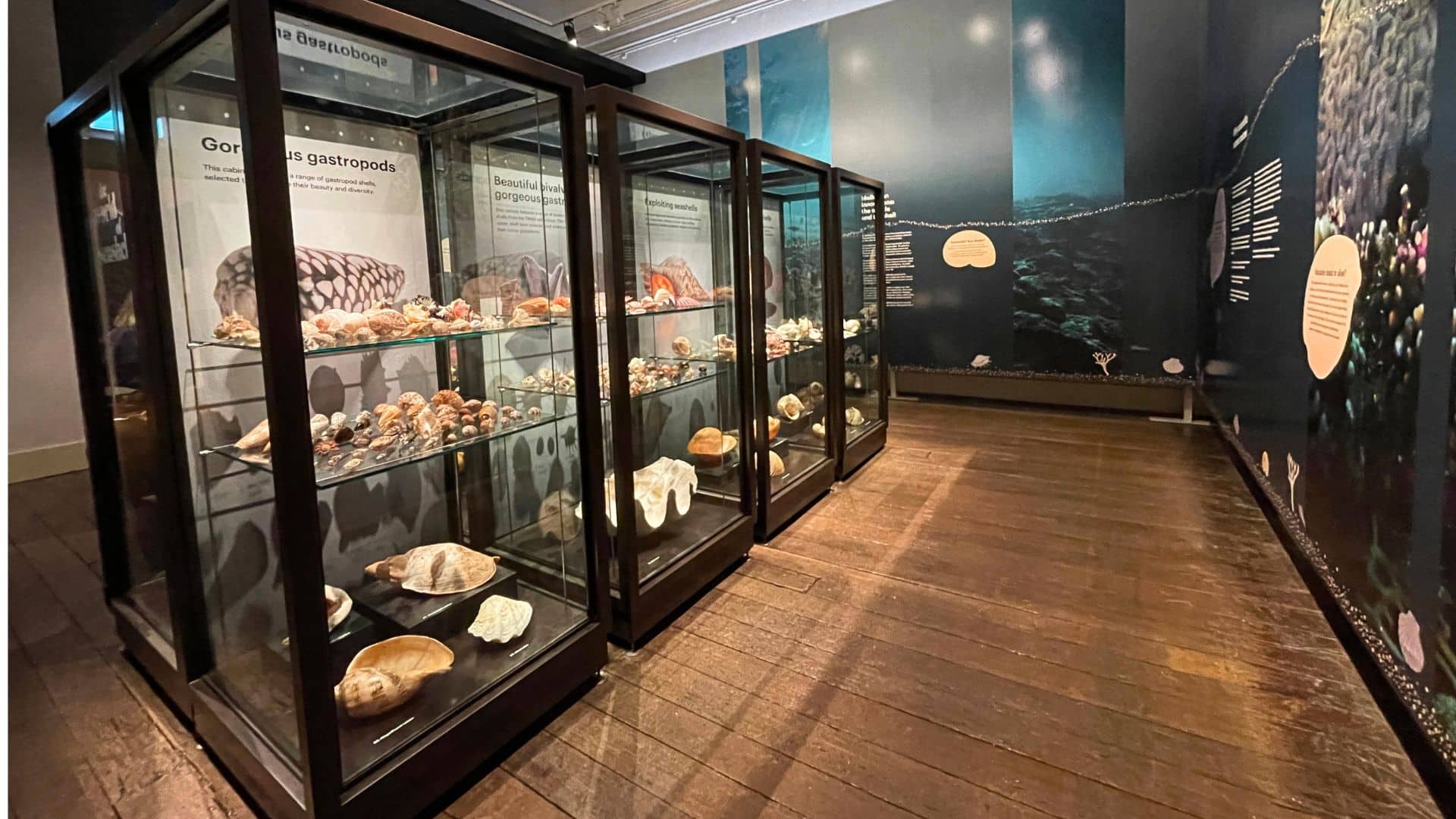
The World of Seashells exhibition at TMAG.
Three exhibitions, one great visit
Once I finished looking at The World of Seashells, I headed over to TMAG’s onsite café and reflected on the three exhibitions over a coffee.
They were well presented, informative, visually appealing, and, above all, interesting.
I was glad that I had taken the time to see them.
* Week 29 of 2026.
Callum J. Jones studied English, History, and Journalism at the University of Tasmania and lived in Western Sydney from 2022 to 2024 while working as a journalist for Professional Planner, a leading online publication for financial planners. He has written for Tasmanian Times since 2018 and has also been published in a range of other outlets, including Quadrant and the BAD Western Sydney anthologies.
If you’re interested in this article, please join our mailing list. It’s all free … and we won’t share your information with anyone!
If you have any comments you’d like to add to this article, please contribute via this form. We’re trialling this while we work through replacing our comments section.
Truly independent media is a cornerstone of democracy.
Remember: once they gain power the first action of every despot in modern history is to take control of the media, so please consider supporting us.
Your kids will thank you and so will your Granny, but the aspiring despots won’t…