Article
Salmon Drug Spin Ignores Public Health Contradictions

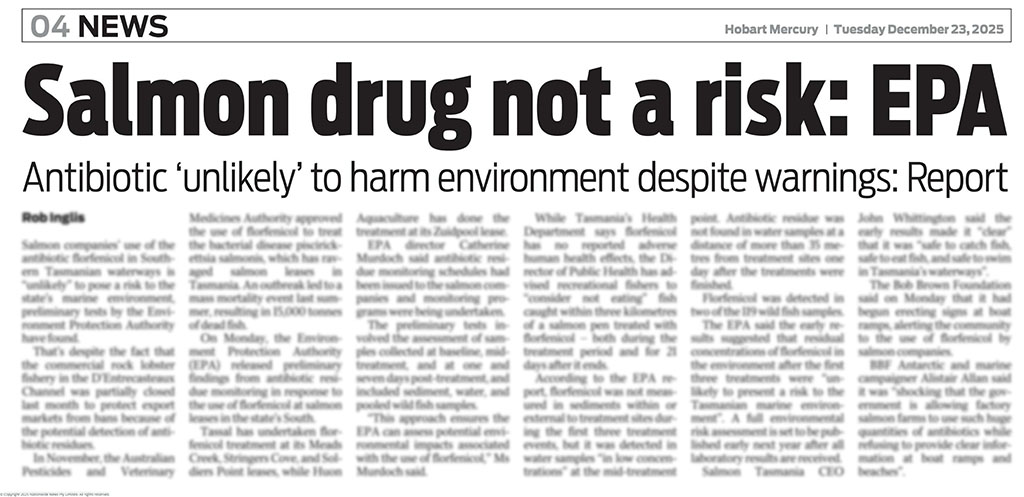
The Environment Protection Authority (EPA) and the Department of Health are facing urgent questions after releasing preliminary results that downplay the risks of mass antibiotic use in the D’Entrecasteaux Channel. While mainstream media has largely repeated the government’s narrative that Florfenicol is “unlikely” to harm the environment, Tasmanian Times has pressed both departments on why a 3km exclusion zone remains in place if the drug is as “safe” and transient as claimed.
Despite the EPA’s 13:18 media release yesterday claiming low residue levels, the regulator’s media office effectively “went to lunch” for the Christmas break shortly after.
An automated response informed Tasmanian Times that the inbox would not be monitored until 2 January 2026. After a follow-up with the Department of Natural Resources and Environment (NRE), a spokesperson pointed to the EPA website—information already reviewed and found lacking by this publication.
The “good news” narrative currently being circulated by Salmon Tasmania CEO John Whittington—who claims it is “clear” the water is safe for swimming and fishing—stands in direct opposition to the government’s own standing orders.

The primary unanswered questions remaining for the government include:
The 3km Discrepancy – If residues disappear within 35 metres as the EPA claims, why does Public Health still demand a 3,000-metre exclusion zone?
The Scale of Use – The EPA continues to focus on “low concentrations” while refusing to confirm the total tonnage of the drug administered to the Channel.
Wild Fish Risks – The report confirms Florfenicol was detected in wild Australian salmon, yet the government refuses to provide physical warning signs at the boat ramps where these fish are landed.
In the absence of government transparency, the Bob Brown Foundation has taken the step of installing its own warning signs at boat ramps statewide.
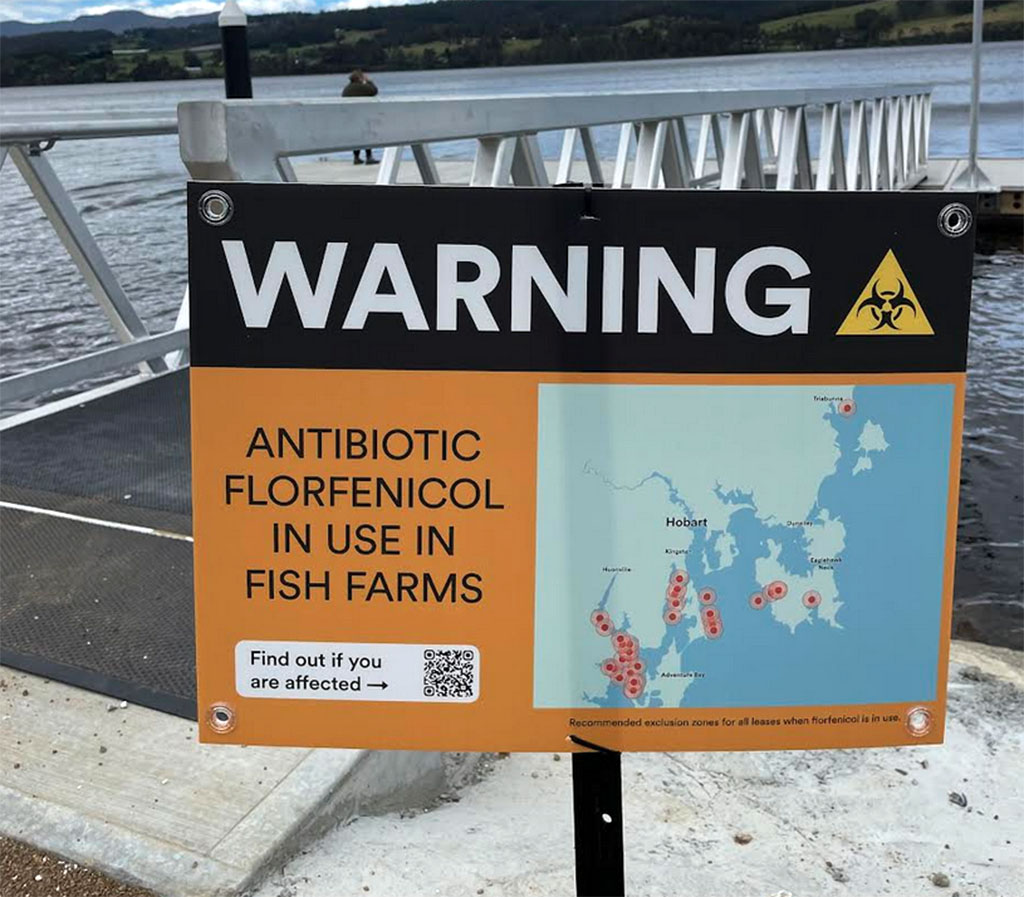

BBF campaigner Alistair Allan described the government’s refusal to provide clear on-site information as “shocking” given the volume of antibiotics involved.
Tasmanian Times has advised the NRE that we will continue to pursue these answers today. We believe the public deserves more than a “pre-Christmas data drop” before heading into the water.
Tasmanian Times (TT) is a community-based news and current affairs service covering the island state of Tasmania. It exists to provide a diverse presentation of Tasmanian issues. TT creates and supports independent media content utilising the best of modern technologies and tried-and-true practices of public-interest journalism.
Support us in expanding our coverage and developing new content by and for Tasmanians.
New initiatives on the way include … what our contributors and readers suggest! Please get in touch with your suggestions.