
Paul Davies delivers a profoundly enlightening exploration of quantum physics in Quantum 2.0, a book that stands as an essential guide for anyone seeking to understand one of humanity’s most transformative scientific discoveries.
What makes this work exceptional is its readily accessible scope and ease of reading – even though the topic is challenging. Davies structures the book into four organised parts that start with the theoretical foundations of quantum mechanics through to its real-world applications and cosmic implications.
In Part One – Paradigm Shift – Davies brings the great minds of physics to life—Planck, Einstein, Bohr, de Broglie and Schrödinger—not as abstract figures but as intellectual pioneers grappling with genuinely revolutionary ideas.
The most striking revelation is in Part Two – New Technological Marvels. This section explores the emergence of “Quantum 2.0“—the second great quantum revolution which is truly compelling. Here, Davies demonstrates how quantum mechanics has moved from the theoretical realm into the machinery that powers our modern world.
Whilst the first quantum revolution (Quantum 1.0) gave us the knowledge that atoms and photons behave according to quantum principles, Quantum 2.0 empowers us to actively control and manipulate those quantum properties for technological advantage.
Having read a pre-release copy of this book I am still unsure if I completely understand quantum principles. I am however comforted after listening to Dr Karl Kruszelnicki on ABC radio recently he too admitted he is struggling with how to cogently explain quantum principles.
The timeliness of Quantum 2.0 cannot be overstated.
Governments and corporations worldwide are making massive investments in quantum technology. The UK has established a National Quantum Technologies Programme as major tech companies across our planet are racing to develop quantum computers. Cryptography is just one fascinating area that will impact our financial and stock markets in ways we can only imagine.
Davies achieves the difficult balance of making quantum mechanics comprehensible to non-specialists whilst respecting the genuine complexity of the subject.
He uses concrete examples without resorting to misleading metaphors.
Davies’ doesn’t merely explain the past and present but he also explores implications for the future, from quantum artificial intelligence to the possibility of quantum effects in consciousness itself.
Throughout all of this the writing remains clear and engaging.
Davies proves that quantum physics is not a dry academic subject confined to laboratory walls but a living, evolving field with profound implications for technology, biology, cosmology and philosophy.
Highly Recommended for anyone curious about science, technology, the future, or the fundamental nature of reality. This is a truly compelling read.

Published: 2 December 2025
ISBN: 9780241655801
Imprint: Penguin Press
Format: Hardback
Pages: 320
RRP: $45.00
About the Author
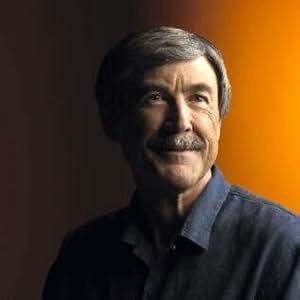 Paul Davies is an award-winning physicist, cosmologist and science communicator who has spent a career making profound scientific concepts accessible to general audiences.
Davies is an astrobiologist at Arizona State University, where he runs the pioneering Beyond Center for Fundamental Concepts in Science. He also chairs the Search for Extraterrestrial Intelligence Post-Detection Taskgroup, so that if SETI succeeds in finding intelligent life, he will be among the first to know. The asteroid 1992OG was officially renamed Pauldavies in his honor. In addition to his many scientific awards, Davies is the recipient of the 1995 Templeton Prize–the world’s largest annual prize–for his work on science and religion. He is the author of more than twenty books, including The Mind of God, About Time, How to Build a Time Machine, and The Goldilocks Enigma. He lives in Tempe, Arizona.
Tasmanian Times (TT) is a community-based news and current affairs service covering the island state of Tasmania. It exists to provide a diverse presentation of Tasmanian issues. TT creates and supports independent media content utilising the best of modern technologies and tried-and-true practices of public-interest journalism.
Support us in expanding our coverage and developing new content by and for Tasmanians.
New initiatives on the way include … what our contributors and readers suggest! Please get in touch with your suggestions.