The problem with our government is not that they cannot see the crisis – they can. It is that they have chosen not to listen to anyone warning them about it.
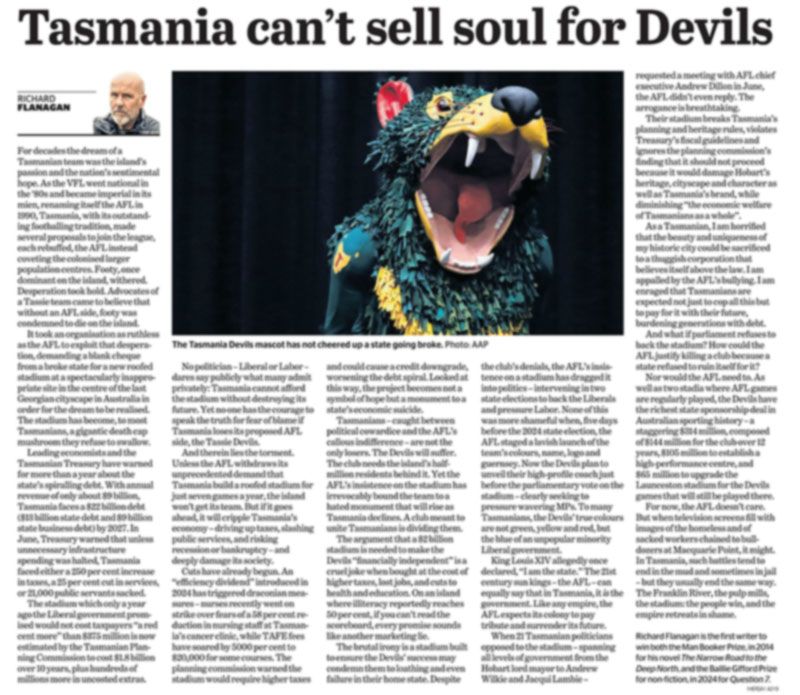
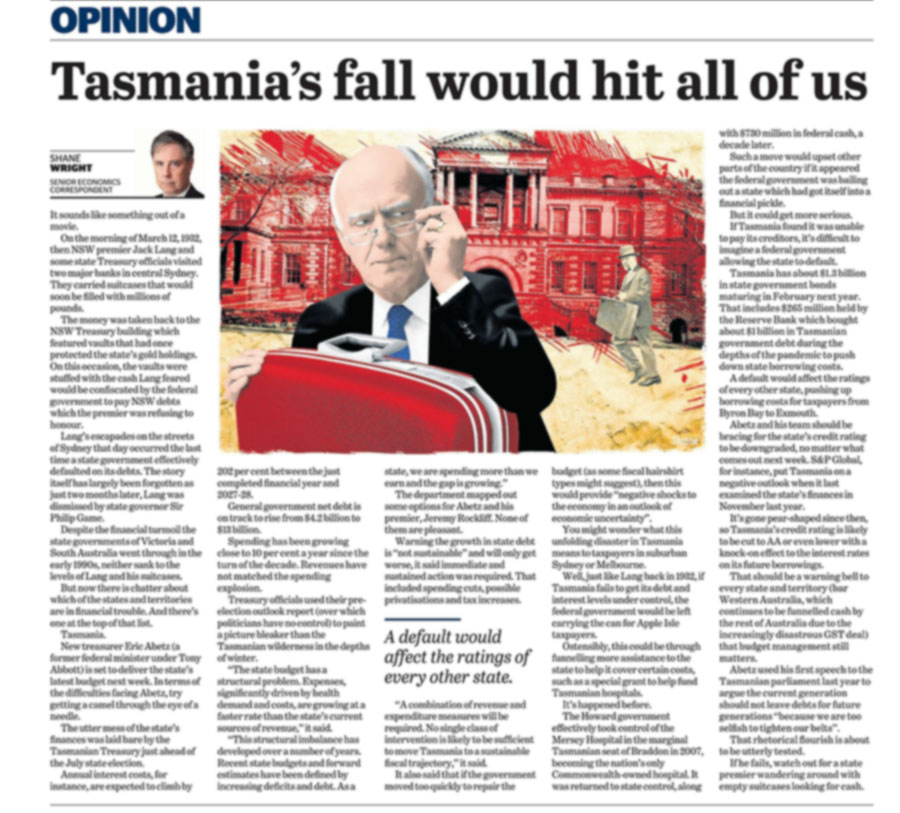
This week, two significant voices outlined why. Richard Flanagan – the Man Booker Prize-winning author – published a moral critique of what the AFL stadium will do to Hobart and to Tasmania’s values. Shane Wright – senior economics correspondent for The Age and The Sydney Morning Herald, someone who has covered every major fiscal crisis Australia has faced in recent decades – published a technical analysis showing why our state’s trajectory is unsustainable.
Together, they made a straightforward case – this project fails on every measure that matters.
Yet our government proceeds. Not because they necessarily disagree with the analysis. But because they have stopped listening.
The evidence is plain. Our government has dismissed the Tasmanian Planning Commission – an independent expert body they themselves established – which spent a year investigating whether the stadium should proceed and concluded it should not. The Commission found it will have irreversible negative impacts on Hobart’s character, damage areas of Aboriginal significance, affect the war memorial, and diminish the economic welfare of Tasmanians as a whole.
The Treasury warned this path is unsustainable. The government dismissed that too.
When twenty-one elected representatives – spanning all levels of government, from local mayors to federal MPs – formally requested a meeting with the AFL to discuss renegotiating the stadium condition, the league ignored them until the delegation showed up at their offices insisting to be heard. Our state government did not amplify those voices or coordinate a response. It remained silent.
That silence matters because it reveals something fundamental – our leaders have stopped governing for the people who elected them and started governing for the institution that made them a promise.
Premier Rockliff believes his election victory gives him a mandate for this specific project. The parliamentary record suggests otherwise. In the recent election, Labor and the Liberals won 24 seats between them. Eleven seats went to crossbench and Greens members – many explicitly elected on an anti-stadium platform. This is not a ringing endorsement of the stadium. It is a deeply divided parliament on a deeply divisive issue.
The arithmetic in the lower house may give the government the votes to pass this. But the upper house – where independents hold the balance of power – remains genuinely in play. This is not decided. This is still a live political question.
What makes that question so urgent is what hangs on it. Wright detailed how our state faces the prospect of credit rating downgrades – potentially to AA or lower – which will raise borrowing costs not just for Tasmania but for every other state in the nation. That has consequences far beyond our borders. Flanagan showed how the stadium will become a symbol not of unity but of government contempt for expert advice and community opposition. He warned that if this proceeds, Tasmanians will not accept it as settled – they will take to the streets, to the courts, to the ballot box, the way they fought the Franklin River and the pulp mills.
The crossbench representatives who met with the AFL this week – Vica Bayley, Cassie O’Connor, Kristie Johnston, and Peter George – made clear they do not believe this is a tenable position. They will vote against it. They are not bluffing. They have been explicit – they will continue to oppose this regardless of how parliament votes because their constituents elected them on exactly this platform.
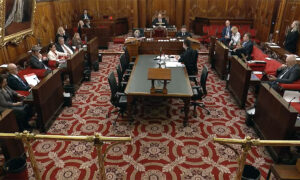
The question now is whether there are enough votes in the Legislative Council to block it.
Our role at Tasmanian Times is not to decide that question. It is to report what is happening and why it matters. What we see across our communities – in media releases, social media, conversations about governance – is genuine alarm about what this government is doing. But we also see something else – a political system that still has checks and balances. The crossbench is mobilised. The upper house is not settled. This outcome is not predetermined.
What should concern every Tasmanian is not the votes that will be cast in December. It is the fact that we have reached a point where our government feels it can ignore its own expert bodies, its own Treasury, and twenty-one elected representatives – and simply proceed anyway.
That is what happens when leaders stop listening. That is what happens when institutions lose the confidence of the people they serve.
The vote will tell us whether this parliament still has the capacity to check an executive that has lost sight of whom it governs for. We will find out in the coming weeks. For now, what is clear is this – our government is gambling Tasmania’s future on the assumption that Tasmanians will accept their silence as the final word.
History suggests they won’t.
Richard Flanagan SMH article here (paywalled)
Articles as published this week in the Sydney Morning Herald (intentionally blurred) due to copyright.
Tasmanian Times (TT) is a community-based news and current affairs service covering the island state of Tasmania. It exists to provide a diverse presentation of Tasmanian issues. TT creates and supports independent media content utilising the best of modern technologies and tried-and-true practices of public-interest journalism.
Support us in expanding our coverage and developing new content by and for Tasmanians.
New initiatives on the way include … what our contributors and readers suggest! Please get in touch with your suggestions.