Newsletter item – Tasmanian National Parks Association, 29 September 2024
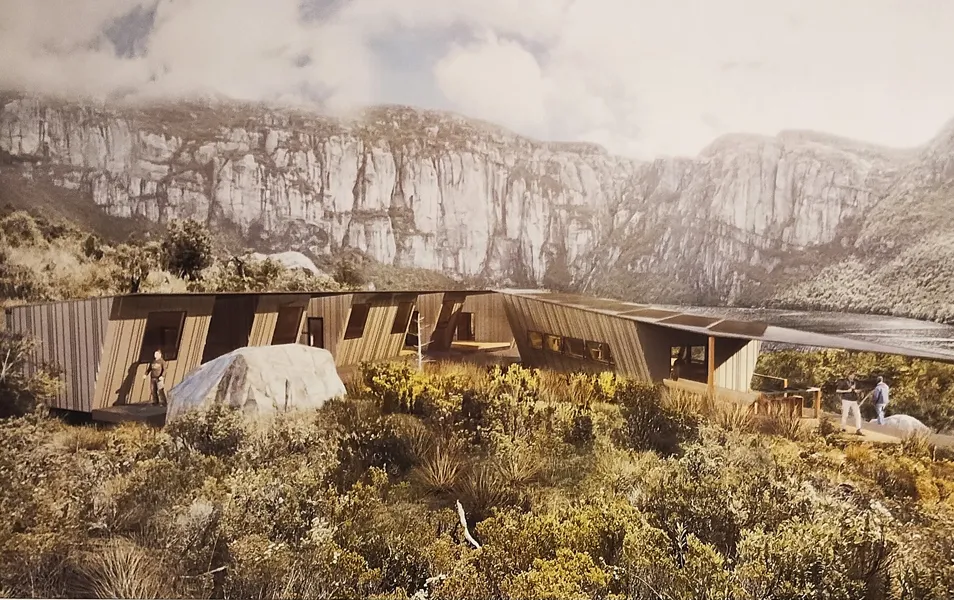
Artist impressions of Tyndall Range lodges
A series of public information sessions conducted by PWS on their ‘Next Iconic Walk Project’ in the Tyndall Range have now concluded.
Many detailed computer-generated images of each node were provided. For the first time, these make clear the sheer number of structures proposed at each node, and resultant impact on a currently wild landscape. Structures include a large building containing bunks, kitchen and dining facilities, a ‘lounge’, a viewing deck, separate accommodation ‘pods’ for clients who are prepared to pay more for private sleeping quarters, a separate toilet block and separate staff accommodation.
The displays confirmed the locations of the shelters to be placed near the halfway point of each day’s walk to provide the clients somewhere to shelter from the rain. They also confirmed that the southern node has been moved to Lake Mary from its previously proposed location on top of a knoll below Mt Geikie which seemed ludicrously impractical.
PWS has previously indicated the nodes have been selected to offer spectacular views (and hence concomitant visibility for the structures), and that the architecture will also contribute to the ‘wow’ factor. This represents a change in design philosophy; previous PWS lodges elsewhere have made at least some attempt to blend into the landscape.
The TNPA has previously argued that the opening of the new track will facilitate an unplanned trampled pad forming from Huntley Lookout to the summit of Mt Tyndall but discussion at the information session reminded us that that, in addition to Mt Tyndall, an ‘Abel’ coveted by many bushwalkers, there are two other Abels in the area; Mts Geikie and Sedgwick. The new track will also facilitate access to these; more unplanned pad development seems inevitable!
TNPA remains of the view that the Tyndall Range is an inappropriate location for the proposed walk development and that the expenditure of the $40 million budget on other options could have benefited west coast tourism just as much, or more. For more background on the issue see here and here.

Tasmanians Locked Out of More Public Land
Tasmanians will be locked out of more public land, with Budget Estimates last week confirming that non-paying bushwalkers will no longer be permitted in beloved parts of the Tyndall Range Conservation Area under Parks and Wildlife’s proposed $40 million plus resort complex walk.
Walkers who have moved delicately through the area for generations will have to pay fees projected to be higher than the 5–7-day Overland Track – for just two nights – should they want to visit. This will inevitably put pressure on the remaining freely accessible, environmentally sensitive parts of one of Australia’s most spectacular and wild viewscapes.
This is an elitist and exclusionary approach to managing our reserve system. Ordinary Tasmanians face being priced out and locked out of public lands.
Recent price hikes for Cradle Mountain shuttle bus fares add to the fear of average Tasmanians being priced out of the beloved park with the proposed cableway undergoing another secretive business plan revision. This comes after the project has more than tripled in construction estimates.
We’ve already seen this exclusionary approach on display. Halls Island in the Wilderness World Heritage Area is subject to an exclusive private lease to facilitate a stalled heli-tourism proposal. Several people requesting access have been refused or ignored – including me. However, after scrutiny on the issue at Budget Estimates the departmental Secretary intervened and within three hours approval was given by the leaseholder for me to visit.
It’s extraordinary that it has taken an intervention from a departmental Secretary to negotiate even limited access to Halls Island.
You shouldn’t have to be a parliamentarian to be granted permission to public land – especially part of the Wilderness World Heritage Area.
Tourism must be fair for all to ensure Tasmania’s irreplaceable wild places are authentically “for all people, for all time”.
If Tasmania is to maintain equitable accessible parks, as well as protecting their environmental values, the state must transition toward a regenerative sector approach, instead of the privatisation and intrusive exclusive access of public lands.