Article
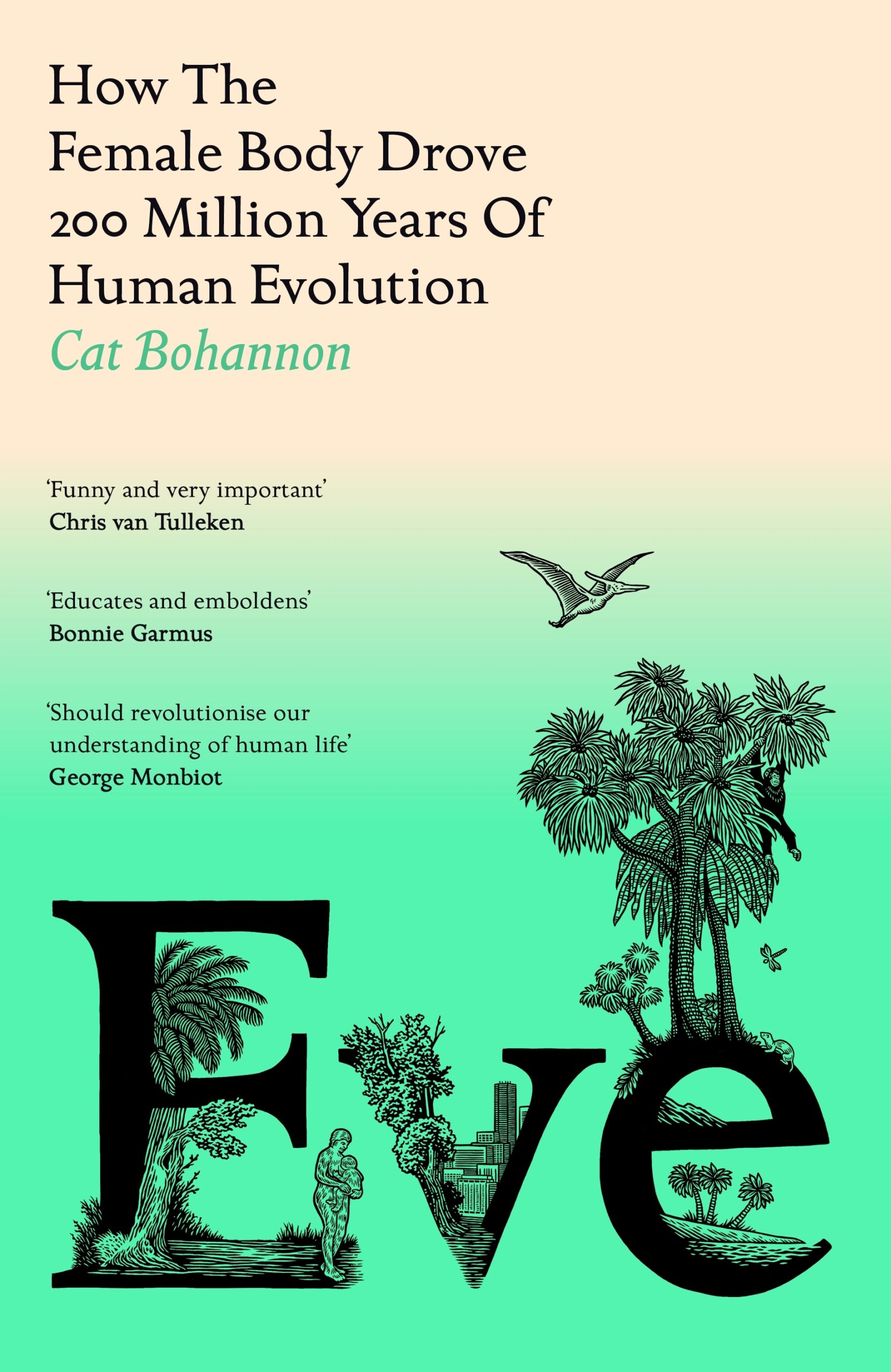
Book Review – ‘Eve’, by Cat Bohannon

51% of our species are often, unaccountably, missing from our sciences. Medical science, for example, is infamous for finding ladies’ cycles annoyingly complex for truly clean results. But, underpinning all the humanities, including medicine and psychology, is the study of human evolution, and without women, it’s a poor data set to draw hypotheses from.
The joy of Eve – How The Female Body Drove 200 Million Years of Human Evolution is how author Bohannon, with an engaging, erudite joie de vie, places the female human body (cis or trans) central to our evolution, revealing insights and wonders. Here, for example, is a book review sentence I never thought I’d write:
Bohannan’s first chapter, on breast milk – stay with me here – is stunning, fascinating, and full of surprises. Seriously – “upsuck?!?” What the…? [looks around, gestures, helplessly impressed] Who knew?
The evolution of any species, within the ebb and flow of complex, interacting environmental matrices, and across millennia, is always interesting. Evolution produces amazing and diversely configured species, and always against unimaginable odds. One of those species is us. But if you think you know the female body, even if you have one, Eve will definitely make you think again. Bohannon’s incredibly broad-ranging updates on how the most complex object in the known universe – us – evolved via the powers of the female body, is extraordinary.
Placing the female body as central to human evolution allows us to rethink everything we currently assume about our species. The truly fundamental leap of human evolution may not have been tool use, or language, the use of fire to cook, agriculture, or the traditional assumption of the smart masculine brain, bravely and inventively defending the family unit while the smaller, weaker woman followed, safely nurturing their young. Arguably, the biggest leap was female control of reproduction. As females developed the means to mediate reproduction via the use of medicinal herbs, and, especially, assisting each other in birthing and nurturing our young*, our species could control individual and species survival in an entirely new way. Evolution, the driver of everything, was made redundant by the female brain. The female body didn’t just make you and me, it made us.


So, nerds rejoice – Bohannon deep-dives and aggregates material from across the entire science-o-sphere to present a richly researched breakdown of how female bits and brains made us all. I can reliably recommend Eve for 51% per cent of the population, and for any of the remaining 49% interested in who we are, what we are, how we got here, and why we, female and male, do the stuff we do.
My only critique is that more could be done to broaden the appeal of this important work. For the publisher, I’d respectfully suggest ditching the 200 pages of notes, bibliography and index, ditching or incorporating the footnotes into the text, and not bothering with the Introduction. The text carries enough weight, and the footnotes, as interesting as they are, too often break up the flow. If a footnote is important enough, why not edit it back into the text?
That said, for me, this is an easy recommend. It tells the human story across the aeons, shines an incisive (and revolutionary) biological light on patriarchies and sexism, and is, in an era where the War on Women continues in every nation, highly relevant.
Eve – How The Female Body Drove 200 Million Years of Human Evolution, by Cat Bohannon, is published by Penguin Books from October 2023, ISBN: 9781529151244 paperback, 612 pages

Featured image above: Nana Kofi Acquah (nkaphoto.com)
*International Midwives Day is celebrated on May 5th.

B.P. Marshall is a scriptwriter and author (and, as it happened, trained as a midwife in Scotland).