Environment
Morality lost in a cloud of smoke

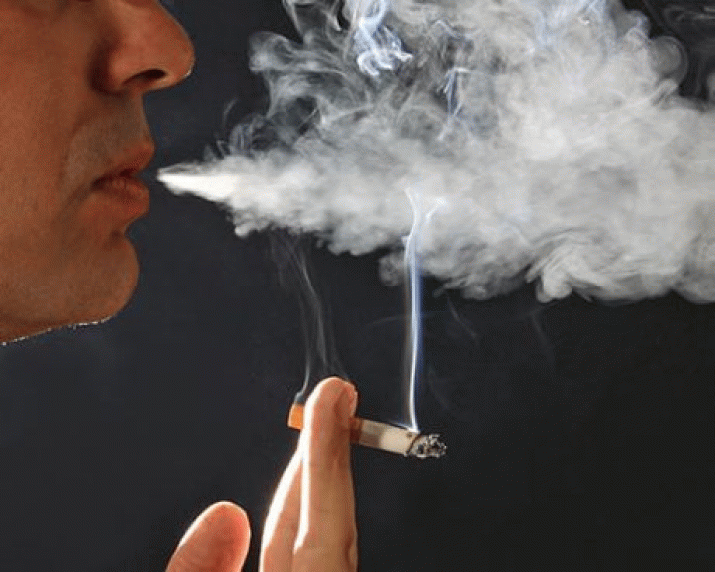

It is perhaps unsurprising that Kevin Rudd is “disgusted” by smoking. The Prime Minister’s revulsions over artworks, people-smuggling and now nicotine addiction have become an integral part of his political script, rationalising cultural censorship, his boatpeople policy, and now, newly announced tax increases on cigarettes, without any sign of moral pause.
The paradox of the federal government vilifying smokers while profiting from their addiction is hardly new. The unpopular King James I’s Counterblaste, was a 17th-century royal outburst on the evils of smoking. But under his reign, the king wrested the right to tax tobacco from English physicians who’d initially controlled the distribution of the demon weed, so as to increase taxation by 4000 per cent. Hypocrisy has always surrounded the control of tobacco.
Adolf Hitler also hated smoking with a passion. Posters showing smokers’ heads being crushed by Nazi jackboots were commonplace. Yet Germany’s per capita tobacco consumption increased between 1932 and 1938 from 570 to 900 cigarettes annually, making it the world’s largest tobacco importer throughout the war, funding up to 12 per cent of the Third Reich’s wartime revenue.
What has changed? In Australia close to two decades of socially engineered anti-smoking “health” campaigns have conditioned citizens to be intolerant of smokers. We have accepted the apparent benefits of high taxes derived from smokers’ ongoing dependence on tobacco. But if our governments are sincere in their drive to eliminate smoking, surely they’d have figured out an alternative revenue stream to the taxation collected from nicotine addicts?
Sadly, there are all too evident similarities between the government’s commercially sponsored lack of interest in regulating poker machine technology and its paucity of scrutiny of cigarettes’ ingredients.
Cigarettes are the only consumer product invented purely to capture permanent public usage through chemically managed addictive ingredients. In the past decade, US smokers became unwitting consumers of genetically modified Brazilian tobacco that contains up to 50 per cent higher levels of nicotine. In mid 2009, US President Barack Obama finally signed legislation giving the FDA full regulatory powers over cigarettes’ ingredients. This should have made headlines throughout the world, but the epic victory in the protection of American smokers passed with little comment. Why?
Unlike Clairol or Kellogg’s, tobacco companies are still not legally required to print their complete menu of contents on their packaging. Why has this institutional resistance to legislating the declaration of cigarettes’ contents been allowed to continue?