Economy
Precautionary Tails! South Arm cops another dose of 1080

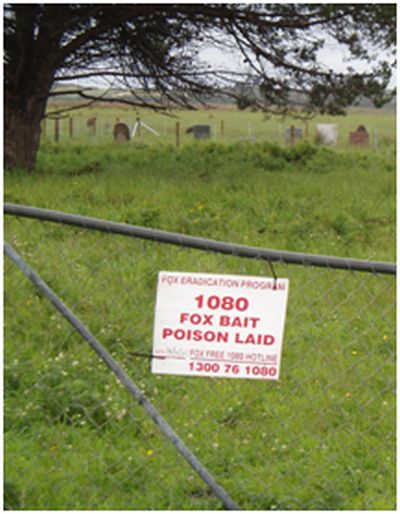

The Fox Eradication Program can expect a chilly response from the irate residents of the South Arm Community when they roll into town on Monday morning to re-lay the 1080 baits they were forced to dig up due to concern during the school holiday period. With critical gaps remaining in biological data and unanswered questions from the locals about the validity of this program the FEP no longer has the integrity to keep pushing this onto Tasmanians. Community confidence is paramount to the acceptance of public policy.
Tasmanians find it insulting to be given all these illogical and unscientific statements without proper analysis and supportive data. The problem for people is that it just doesn’t add up. Landowners are refusing entry as they have a right to do so and the FEP knows without community support in a landmass the size of Tasmania the program is reduced to tatters. If the risk to Tasmanian wildlife is so high why isn’t there a legal obligation for all landowners to comply? It just cannot work, foxes or not.
When experts in the field of foxes contact media to put the real science forward and give Tasmanians a level playing field of information they are stonewalled. Why is that? They are hung up on or their calls are not returned. Conflicts of interest? So the same old repetitive wheelbarrow is pushed. You have to wonder why this issue is under such great protection.
Craig Elliot manager of the Fox Eradication Program now called the Invasive Species Unit stated on ABC radio this week (Wednesday 19 September) that the detector dogs can still detect scats up to three months old. Those dogs were never used for that purpose at South Arm. When the community asked the FEP why the dogs were not used to sweep the area first before using the unjustified 1080 poison baits they were told it was too expensive and too time consuming yet these dogs are trained to pick up fox scent, scats and dens of young. It makes sense to use them, any rational person would. Breeding dens are not hard to find. Foxes mark their boundaries with urine. If any of these had been confirmed along with footprints and DNA tested scats from the same fox that proved providence once and for all the FEP would have had the evidence to gain the full support of the South Arm Community.
I asked Mr. Elliot what evidence did he believe he had that proved foxes were present on the South Arm Peninsula, this was his reply: ‘Over an extended period evidence of almost 20 foxes, including four carcasses have been identified in the state. Additional evidence has been found but the fragile nature of DNA has meant that it couldn’t be analysed down to identify individual animals. This evidence has been found over a broad area and indicates a dispersed population across the state. Your area has been identified as a likely area where foxes could habitat.’
Does it and has it? I don’t think so.
The only reason for not using the highly trained dogs that our Community can see is that there are no foxes present to find. So why poison? Mr. Elliot’s answer, ‘We are aiming to destroy foxes.’ But with no evidence that there are foxes on this narrow peninsula, what are you aiming to destroy Mr. Elliot?
Mr. Elliot says well its more complex than that. Politically perhaps, scientifically no. Dr. Clive Marks, Director of Nocturnal Wildlife Research, previously head of the Victorian Governments Vertebrate Pest Research involved with fox biology for over ten years, explains it quite well. Ockham’s Razor – the simplest explanation or hypothesis to explain the data we have is usually the correct one.
A good example of this is that on the Australian mainland typical fox behavior is that foxes leave scats close to bait stations, so why does that not happen here in Tasmania? Any found here are quite random and nowhere near a station. A scat also turned up on Bruny Island now that suggests a fox swam much farther than any previous evidence states or it arrived there by boat. While Dr. Clive Marks agrees the most convincing evidence comes from DNA in scats you must be ‘absolutely confident that those scats were not planted, contaminated, mislabeled or subject to unknown errors in analysis.’ Given the evidence we have seen in the media can the community be confident of that?
Dr. Marks says foxes can defecate up to eight times a day and are territorial; it should not be too hard with a well-trained dog to find more than one scat from the same fox. A carefully managed operation should be able to achieve that well within ten years. This is where things really don’t add up. Of the sixteen individuals identified, collected from a really broad area, remembering that foxes are territorial, they have dens of young to care for, no two scats come from the same fox. That is an anomaly something is amiss here.
Dr. Marks finds it puzzling that ‘an established breeding population of putative foxes can exist over such a wide area and still be deemed possible to eradicate. At the same time it is impossible to detect, so say the FEP, and no actual evidence of fox control has been collected. This is one of the greatest logical flaws in the program.’
The FEP operates under the ‘precautionary principle’, which demands no actual proof to justify an action (just ask them any question). It operates purely on a belief that we can’t afford not to act. As Dr. Marks will tell you any scientist worth his salt finds that extremely uneasy! Which is probably why the FEP doesn’t have any Fox specialists as such on their team. It is considered a path to the dark side as far as Dr. Marks is concerned. It is always easier to fuel fear than it is to test the validity of that fear.
Doubt and concern have been raised about the authenticity of the carcasses mentioned by Mr. Elliot. Stateline 2010. Dr. David Obendorf a veterinary pathologist questioned the 2006 Glen Esk carcass found at Conara and asked for the evidence for analysis. Dr. Obendorf was suspicious about the: time of death, cause of death and place of death, feeling it raised more questions than answers he felt the dead fox was much older than suggested and died several days prior to the alleged time. He concluded that the pathology and forensic testing confirmed that this incident was a fabricated case. This incident was not an authentic case. In the Public Accounts Committee Inquiry one of the DPIPWE biologists conceded that the animal had been killed somewhere else and dumped at the Glen Esk site. Dr Obendorf feels that none of the remaining fox exhibits, not the bodies, skull or blood is irrefutable evidence of fox presence in Tasmania; there is nothing that links those exhibits to Tasmania and can be explained as transportable evidence from the Australian mainland. The onus of proof was with DPIPWE to link these exhibits to Tasmania and it could not be done.
Retired professional shooter Ian Rist also finds the need to import 600-700 scats from interstate curious asking why so many? Surely that casts suspicion. Mr. Rist has doubts of an established population of foxes in Tasmania. He says, ‘Foxes on average have a life expectancy of only two years in the wild, 70-80% of young foxes do not make it to their first birthday, the maximum red fox life expectancy in the wild is 6 years…so over a ten year period (how come) we have no cubs?’ 16 foxes and not one shot, trapped or photographed. The FEP has 203 motion cameras at their disposal.
A $1000 reward for a genuine Tasmanian fox was available for 4½ years [2006 to 2010] and in the last year it was increased to $5000… no takers.
Based on belief that Arm End is a nice place for a Fox to live our Community are asked to tolerate a very hodge podge application of 1080 that is supposed to rid us of something we don’t have in the first instance. Residents are expected to tolerate the suffering of our wildlife and pets for the cause. Without hard scientific evidence I find that unethical.
I am sure Arm End would be a nice range for a herd of elephants to graze on as well but I have not entertained precautionary eradication of those, so why should I for foxes? Well the circus has been in town recently; it’s not that far a stretch. Arm End is a public recreation area that many people cover daily on a peaceful walk with their dogs of all breeds, surely one would have picked up a trace of a fox by now knowing we are supposed to be on the look out for one. A few innocent golden possums with big brushy tails are all that you’ll find living here, could be confused with a fox in the dark I suppose.
References:
Dr. Clive Marks: The Fox that wasn’t there.
http://oldtt.pixelkey.biz/index.php?/weblog/article/the-fox-that-wasnt-there/
Dr. Clive Marks speaks with Louise Saunders on ABC Radio on 21/7/2010-about DNA.
http://blogs.abc.net.au/tasmania/2010/07/dr-clive-a-marks-talks-foxes-.html?site=hobart&program=hobart_drive
Stateline October 15/2010. link: Dr Obendorf, Ian Rist and the FEP.

ABC News Doubt cast by Dr.Marks.

Stateline on History of fox and beginning of Taskforce.

Penelope Marshall studied creative writing at Queensland University and has a Diploma in Freelance Journalism. In Hobart she has attended courses with local writers and journalists and studied for a Diploma of Arts in Professional Writing and Editing. She has had many feature stories and short stories published and is in her final year of an Arts Degree at The University of Tasmania majoring in English and History. Published works include stories in the Convict Lives at the Female Factory series and feature stories in 40 Degrees South Magazine. She lives in Opossum Bay where, when not writing, she runs a sanctuary for orphaned and injured wildlife … and owns lots of pets.