Environment
Franklin River fiasco


After the years of conflict over the future of Tasmania’s world-renowned Franklin River one might have thought its wilderness character was now secure.
Think again.
Despite the canning of proposed Hydro-Electric Commission dams, protection of the area within a national park, vesting of its management with a supposedly alert and professional park management agency with input from the Australian government, and incorporation of the area onto the List of the Worlds Natural and Cultural Heritage, you will be in for a surprise if you take a trip down the Franklin today.
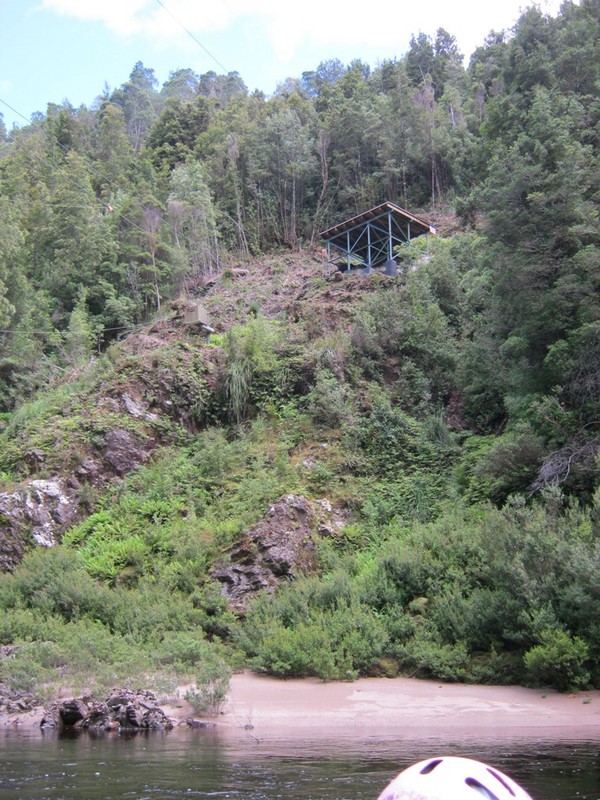
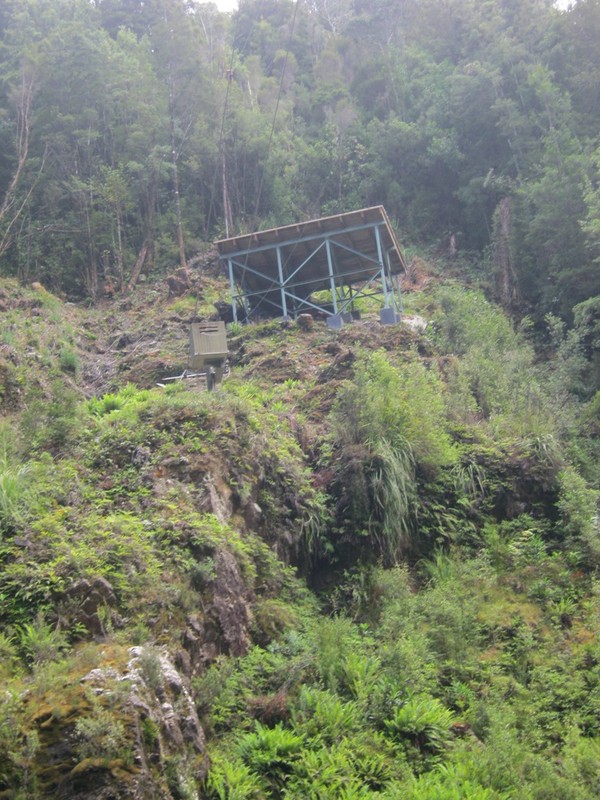
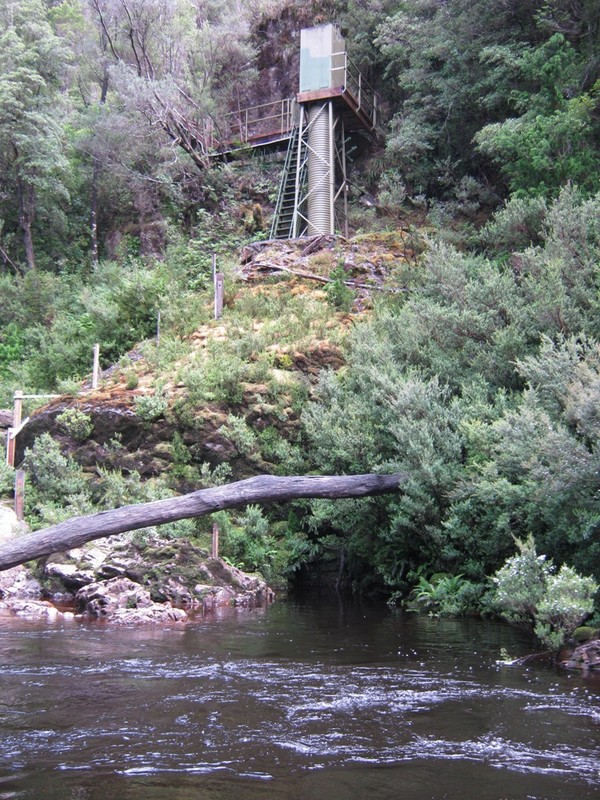
Because a day or two down the river, just when the cares of everyday life are finally being replaced by the peace and equanimity this wild and beautiful place offers, you will come around a corner to find metal cables strung across the otherwise magnificent view. And the photographs accompanying this contribution were not taken back in the days before Australia’s High Court ruled against flooding of the Franklin, they were taken in February 2011.
This is not junk left over from earlier times, like the rubbish that the HEC has left still littering other sites where it operated along the Franklin, such as at Mt Call or near Flat Island – this is an entirely new assault on the Franklin, out of site and out of mind to a public that foolishly believes that times have moved on and that the Franklin is now safe.
For here at Fincham Crossing, in the heart of what is supposed to be the Franklin River wilderness, it is not just new cables – the vegetation to either side of the river has also been laid waste. And a shiny new cantilevered helipad looms over-head, jutting scab-like out from these vivid scars.

How can this possibly have been allowed to happen? Many, many questions arise from this situation.
Clearly these recent works have been undertaken to facilitate continued recording of stream flow down the Franklin. Why?
Perhaps we will be told that it is for scientific reasons, but science that is so intrusive has no place whatsoever in a World Heritage Wilderness.
And I hope that is not the sound of the Hydro Maru I hear, as it chases freshwater whales up the Franklin, solely for scientific purposes of course. Perhaps the Hydro Maru charges her batteries at the shiny array of post High Court gear that I also noticed a few days later jutting into view near the original Gordon-below Franklin dam-site.
And even if there was some valid reason for continued recording of stream-flow along the Franklin, what possible justification could ever exist for creating so much environmental damage just to install a simple gauging station?
And why would clearing a simple helipad require vegetation clearing on a scale that leaves one wondering if the job was contracted to whoever was responsible for developing Melbourne’s Tullamarine International airport and who have never quite learned the meaning of the words “national park” or “over-kill”?
And how did this go ahead without the public being made aware that such a venture was in the offing? It simply beggars belief.
Aren’t we supposed to have a Parks Service that manages such special places in an alert and professionally competent manner? Or were they just too busy that day to notice what was happening to our most priceless wilderness river?
Perhaps too busy instead spending Tasmanian taxpayers’ money unnecessarily replacing the perfectly good signs already in place around our parks system with the much more visually intrusive blue and white signs recently installed in order to satisfy the fetish of some unaccountable senior bureaucrat whose grasp of Tasmania’s parlous financial situation is apparently as limited as his sense of aesthetics.
Or perhaps too busy with some cargo-cult scheme to develop at taxpayer expense a series of accommodation nodes around Tasman Peninsula’s Three Capes that will probably ultimately be flogged off to Federal Hotels or some other private operation that has grown all-too accustomed to having Tasmanians subsidise its profit-making ventures.
Just where was our parks service when this latest injury to the Franklin was inflicted? Despite any pathetically predictable cries that may arise of “woops, pity, but we will establish processes that will ensure it doesn’t happen again” the fact is that stopping environmental damage along the Franklin by means of a succesful High Court action, establishing a national park and making it a World Heritage Area were all supposed to do just that – so what would another piece of excuse-making bureaucratic carbon paper be supposed to achieve?
Heads should roll over what has happened along the Franklin. The Hydro has no business being on the Franklin and this should never have been permitted in the first place. And it seems to me that it is also clear that there are some among the present leadership of our parks service who have no business displaying the temerity to relieve Tasmanian taxpayers of a salary for supposedly doing a job that they are clearly not doing, and which could be far better done by some of the many dedicated staff elsewhere in that organisation who actually know what a national park is and who are actually committed to their jobs.
During about 15 years working essentially full-time as a conservationist Kevin Kiernan served as secretary of the Lake Pedder Action Committee, chairman of the Southwest Tasmania Action Committee and founding director of the Wilderness Society. He prepared the first formal proposal for inclusion of the Franklin River in a greatly expanded national park in Tasmania’s south-west and after the World Heritage Area was established worked for a while as a planner with the Tasmanian parks service before leaving to commence a 15 year stint working in the Tasmanian forestry and forest practices system. A geomorphologist by training, he rediscovered Kutikina Cave (14,000 years after it the original Tasmanians moved out of residence) and brought to attention its archaeological importance, which former Prime Minister Malcom Fraser once suggested tipped the balance against the proposed damming of the Franklin. He now lectures in Conservation Geomorphology at the University of Tasmania where he remains active on a variety of research topics, mostly among the mountains of Tasmania, southeast Asia and North America.