Economy
Styx… business as usual


Business as usual in HCV forests until Gillard delivers Government support for agreed peace statement
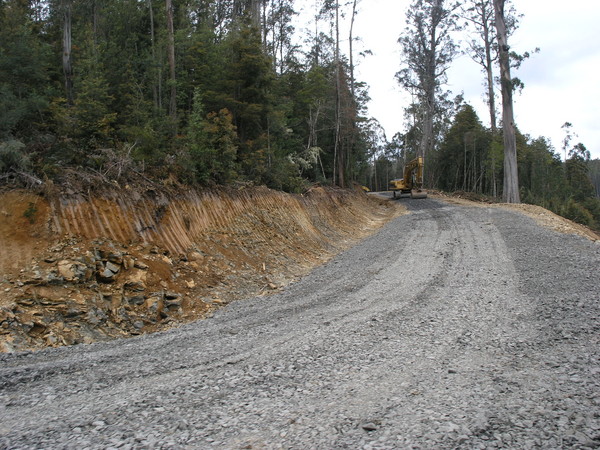
Current controversy over Forestry Tasmania’s new logging in a high conservation-value native forest coupe in the Styx Valley points to a business as usual approach in our forests until the Federal Government announces its support for the forestry peace agreement and outcomes begin to be delivered, including the agreed moratorium on logging.
Any delay in implementing the peace agreement will lead to a continuation of current problems. Conservationists will see logging in forests where protection has been agreed, contractors will remain in financial uncertainty and the conflict over logging will continue.
“The Styx is a classic example of high conservation-value forests that industry and conservation signatories to the peace statement have agreed to protect,” said Vica Bayley, spokesperson for The Wilderness Society.
“We urgently need Prime Minister Gillard to support this historic opportunity and help deliver a win/win for the environment and industry.”

“It is clear that despite the peace agreement, world class forests in Tasmania will continue to be logged and jobs will continue to be lost until Ms Gillard announces her support and begins implementing the agreed outcomes, including a moratorium on logging in identified high conservation-value forests, leading to formal legislated protection in reserves such as National Parks.”
“There is a once in a generation opportunity to resolve the long running conflict over logging and it needs Prime Minister Gillard’s support to now make it happen,” concluded Mr Bayley.
Earlier: Groups welcome Premier’s progress on Forest principles. Look for PM’s suppor
Greg L’Estrange in The Examiner: Pulp mill will be built …
…
The timetable for Gunns divesting itself of unwanted infrastructure is tied up with the forest principles discussion taking place in the state, he says.
“We (Gunns) are now down to the working through the natural forest area and that’s driven to a major degree around the forest principles (discussions),” he says
“We’re hopeful that we can get the right framework and the right progress so that our employees, our contractors and our shareholders have some certainty about what that all means.”
Mr L’Estrange stresses that the company is not negotiating the future of Gunns’ Triabunna facility with anyone.
And while he will not publicly criticise the suggestion that Forestry Tasmania might step in and run the mill to keep the jobs and the resource, he diplomatically steers the options for the mill and other sites around the state that Gunns doesn’t want, outside the Tasmanian square.
“If you look at future demand of products of this nature you would have to have China up there at the top of your list of people who would see this as a valuable resource,” he says.
“But it’s a global industry so I’m sure people see this as an opportunity.”
Mr L’Estrange believes that those interested in the timber industry across the world know well what awaits investors in Tasmania and will be watching with interest as Gunns hangs its non-softwood activities out for sale.
The future of the Bell Bay and Burnie woodchip mills will come down to demand and the long-term structure of the state’s timber industry, he says.
The decision to focus all of this company’s future on softwood timber to feed a pulp mill was a strategic business one, Mr L’Estrange says.
“If you go back to 1980 the consumption in Australia for sawn hardwood was about three million cubic metres a year,” he said.
“Last year, it was slightly over one million, next year it will be slightly under, in line with a reasonably consistent decline of around 2 per cent a year.”
The decline mirrors the increasing use of softwood as a building material, Mr L’Estrange says.
Fashion trends have changed from 30 years ago – people no longer have solid wood kitchen cupboards, furniture is now a combination of timber, steel and glass.
The demand for woodchips is also declining as modern, new pulp mills have a requirement for a more consistent product with high pulp yields, achieved from plantation timber, he says
But Mr L’Estrange is still spending the bulk of his work day both at home and overseas on changing his company’s image before seeking new business.
He knows that is his prime task in the next six months – even ahead of securing the long sought after finance for the controversial pulp mill.
“All of the conflict (in the forests) going on has not helped the brand,” he says.
That is the biggest concern of those from, both within Australia and internationally, with whom Gunns is talking business, he says.
“The brand isn’t about science – the science of the industry is compelling,” he says.
He suggests that the image of the Tasmanian forest industry as a whole needs to change for the success of the pulp mill project.
…
Even though the pulp mill has already been years in the making, Mr L’Estrange won’t be drawn on when construction might actually start.
“It still has a way to go,” he says.
He is comfortable with Gunns’ ongoing talks with financiers for pulp mill money and he is adamant that it will still be built.
Full story in The Examiner HERE
And …
Pulp mill wants to burn tyres
http://www.kruger.com/imports/pdf/en/communiques/2010/20101028_CBPPL_TDF_E15F.pdf