Environment
The Fox Hunt

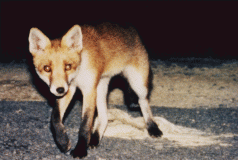

Fox
Eradication
Program
2010
Matt Marrison, Acting Branch Manager
Fox Eradication Branch, DPIPWE
Public reminded to be watchful for foxes on the move
DPIPWE’s Fox Eradication Program is asking the public to be watchful for foxes as the dispersal season begins and juvenile foxes may be on the move. In particular, people in southern Tasmania are asked to be vigilant.
Matt Marrison, Acting Manager of the Fox Eradication Branch, said that most evidence of fox activity had been collected in the north of the state but recent evidence confirms foxes also threaten southern Tasmania.
“Evidence confirms foxes are present in a number of locations in the south, with fox positive scats being collected near Cygnet, Geeveston, Bushy Park and Campania during the past year,” said Mr Marrison.
“We also continue to receive reported fox sightings from members of the public in southern Tasmania which, along with the physical evidence collected, is an indicator of widespread fox activity in this region.
“The public really have an important role to play by being the eyes and ears of the fox eradication effort, particularly at this time of year,” he said.
Red foxes breed during winter, with parents rearing the cubs during spring and into summer. By late summer, juvenile foxes begin moving away from den sites, resulting in foxes being most visible in the landscape at this time.
All fox sightings and possible evidence of fox activity should be reported to the 24 hour fox hotline on 1300 369 688. All calls are confidential.
Planning is currently under way to target all areas in which fox activity has been identified, as well as areas that have core fox habitat, with fox baiting programs. Local communities in target baiting areas will be contacted well in advance of on-ground operations and members of the public will be invited to attend information sessions planned for each area. These sessions will provide an opportunity for people to find out more about foxes and the Fox Eradication Program, and have their questions answered.
Mr Marrison said that a recent independent review of the Fox Eradication Program by international pest eradication experts had provided some important recommendations that would help improve the likelihood of success of the eradication effort.
“One recommendation we have moved swiftly on is obtaining four dogs to train as scent tracking dogs,” he said.
These dogs will take about a year to train and will be used to track and locate individual foxes in the landscape so that they can then be destroyed. Previous attempts to use scent-tracking dogs to locate foxes in Tasmania have failed due to the abundance of wildlife scents that the dogs were not familiar with.
“Through the careful selection and training of the tracking dogs in the Tasmanian environment we should be able to overcome these problems,” Mr Marrison said.
The scent-tracking dogs will be used to locate survivors of fox baiting programs and to follow up in areas of suspected fox activity. The dogs are scheduled to complete their training and be available for use in the field by early 2011.
For further information about the Fox Eradication Program or fox activity in Tasmania visit www.dpipwe.tas.gov.au/fox.

