Economy
Pesticide alert to family doctors


At last; a preventative health strategy that DOES seek minimization to all pesticide exposure.
I look forward to seeing chemical policy reforms with full application of the precautionary principle by the APVMA, State chemical regulators and public health to allow implementation of this approach. – Dr Alison Bleaney.
Quotes
“The preponderance of evidence uncovered in our systematic review indicated a positive relationship between exposure to pesticides and development of some cancers, particularly brain, prostate, and kidney cancers, as well as NHL and leukemia. A number of the studies on children found increased risk of cancer associated with critical periods of exposure, both prenatal and postnatal, and with parental exposure at work. Most studies showed increased risk, and many showed dose response relationships…
We believe that there is enough evidence to recommend that patients reduce use of pesticides. Because most studies analyzed exposure to multiple rather than individual pesticides, our recommendation is to reduce exposure to all pesticides. The results of this systematic review have prompted the Ontario College of Family Physicians to recommend that everyone, especially children and pregnant women, reduce exposure to pesticides whenever possible, both at home and in the workplace….
Family doctors should consider asking about pesticide exposure during periodic health examinations and make recommendations about minimizing exposure. They should also encourage use of protective clothing and masks for patients who use pesticides on the job and encourage them to be attentive to the timing of re-entry into recently sprayed areas.
Family doctors can also advocate for reductions in pesticide use in communities, schools, and hospitals, and to governments, and can educate patients about the potentially harmful effects of pesticides on health.”
AND,
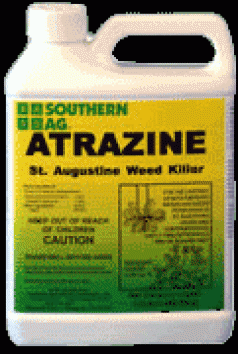
Forbes’ January 21 article, Industrial Chemicals Lurking In Your Bloodstream, lists atrazine as among the top ten industrial chemicals “you should worry about.”
Out of the 86,000 possible chemicals in EPA’s inventory, atrazine made the list because, like high profile bisphenol A (BPA), atrazine is an endocrine disruptor. Endocrine disrupting chemicals (EDCs), says Forbes, “…are thought to interfere with the body’s ability to regulate estrogen or other hormones.
When those processes go awry, it can lead to neurological and reproductive defects. Endocrinologists are concerned that these chemicals may be able to cause subtle health problems at doses far lower than the high doses toxicologists typically use to assess safety today.”
Forbes highlights R. Thomas Zoeller, a University of Massachusetts endocrinologist, who says the widespread presence of industrial chemicals in the human population is alarming. “I sincerely hope that what we know from animal research doesn’t translate to humans, but I don’t have much optimism,” he says. Worse yet, he ads, “You’re not giving people a choice about contamination.”
Such is the case with atrazine, found in drinking water throughout the United States.