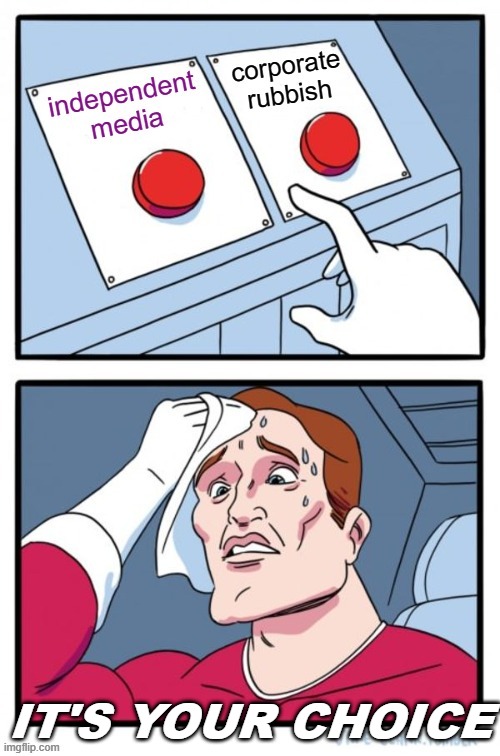
There has to be a more efficient and effective way to deal with the hydra-headed Troll Klan than the proposal put forward by Lindsay earlier this week (HERE). The first thing that happened, of course, when the TT plan for troll control in 2011 was published, was that the anons wanted to contribute to the debate. Troll control by trolls?
The issue about anonymity in relation to commentary on substantive articles which can now be published on the internet, particularly on sites which provide quality analysis not available in the mainstream Australian media, is uncomplicated.
There is absolutely no justification for allowing anonymous commentary on any op-ed article published on the internet. Absolutely no justification at all.
There is only one reason why anonymity has ever been justifiable, and that is to protect the whistleblower. If anonymity is used for expressing a view on an-oped or an attack on others without accountability, it cannot be supported on the grounds of democratic conduct, ethical behaviour, moral courage or any other standard of worthwhile human conduct.
It is that simple. It is a complete furphy that anonymous comments should be allowed on the basis of “my job, my business, my relationships will be put at risk”. That is just troll fodder.
By all means allow people with proven identity to comment. But it is totally farcical to believe that anon commentators, including people, organisations, government departments, GBEs, unions, corporations and others who conduct their affairs in the dark and who identify themselves as Tom, Steve, Anna or Mary, should have any right to a say at all.
How can their “right” to anonymity be justified except by abusing the well-intentioned rationale for its existence? It can’t. There is an abrogation of natural justice and fairness where anonymity is employed to attack a coherently argued op-ed, especially when this is done, and allowed to be done, on the basis of a false analogy between protecting the whistleblower and giving carte blanche to various vested interests to troll their critics.
Anonymity in the current Tasmanian political context merely allows the resources of the political and corporate power brokers and their “mercenaries”, as George Monbiot says (HERE), to be given free rein to stifle the voices they wish to silence, as best they can, ironically with the compliance of TT itself, and doubly ironical for the unwanted – but self imposed – additional workload for TT’s one-and-a-half-man band.
Not only ironical as a time-waster, but easy on the trolls as well, for they don’t have to spend real time and genuinely honest intellectual effort in providing coherent alternative views. They hide in the dark with other elements of the devious and the deceitful, cloaking their identities with the balaclavas of fakery, no different as enemies to free speech than secret organisations of white-hooded men, except in their methods.
This is all pretty obvious, and the Troll Klan would like nothing better than to be bound around with all sorts of ambivalence, ambiguity and a whole list of rules a la Guardian-style to make it all impossible to properly edit.
There is absolutely no substance in the arguments of those who say they will not write unless granted the cover of anonymity. What they have to say anyway has no need whatsoever to claim whistleblower protection, otherwise denied. It has everything to do with an unwillingness to write using their own names, which is merely another contribution to the diminution of free speech, another contribution to the erosion of open and transparent discourse, another contribution to secrecy and hidden agendas and another contribution to the promotion of the preferred way of communication by the power elites.
Those who espouse anonymity in the commentary on op-ed articles across the spectrum, are seriously misguided, or members of Klan Troll, who unwittingly or quite deliberately confuse the notion of “freedom for the whistleblower” with “freedom for the political-corporate-whatever troll”.
It is not difficult for genuine whistleblowers to contact the editor of TT. But of course, the last final irony in all of this is that the genuine whistleblowers in Tasmania in recent years have not hidden their identities. It is those who would pull them down, and who would tear and scratch at their reputations, who use the dark corners of anonymity.
Time for TT to upgrade. Why should the Guardian be the model? Why not TT modelling for the rest? No anonymity, unless genuinely for whistleblower protection. Surely that would reduce the workload of the editor.